


Cloacina is pleased to announce that a 32,000 GPD MEMPAC-E is coming soon to a luxury hotel in Sonoma County, CA! Stay tuned for more details and photos from this project!
Revolutionizing Winery Wastewater Treatment
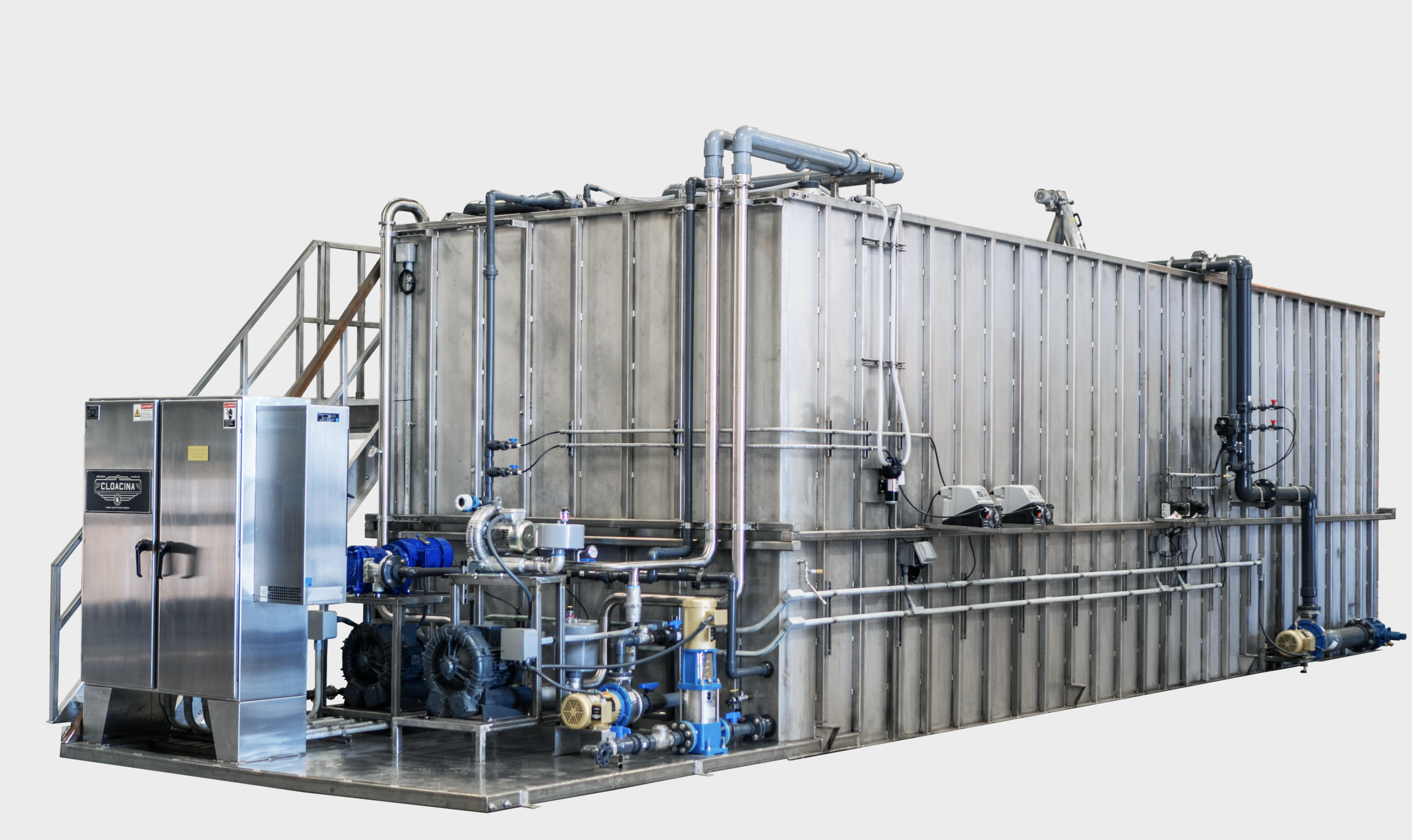
PACKAGE WASTEWATER TREATMENT PLANTS DESIGNED SPECIFICALLY FOR WINERY PROCESS WASTEWATER
Stainless steel tankage and equipment skids come standard on all models
Designed specifically to treat high-strength winery wastewater
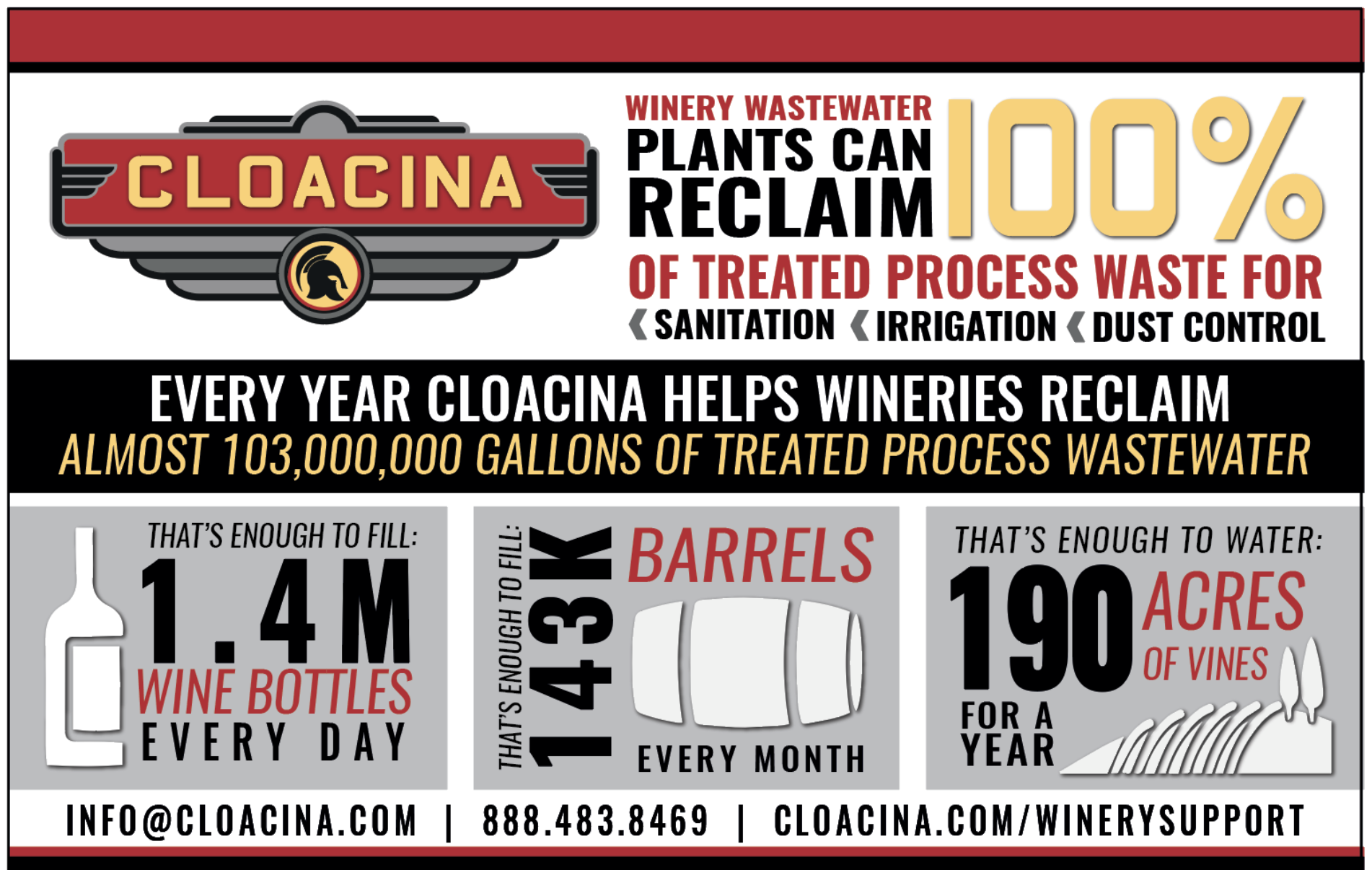
Reclaim 100% of the treated effluent for irrigation and sanitation purposes
Screens and pH adjustment come standard on all models
Easy to install, operate and maintain
Above-grade, partially-buried and buried models available
Models available for installations in small footprints and remote locations
More than a century of combined winery wastewater experience
Systems can be expanded for future growth
SOME OF THE WINERIES UTILIZING CLOACINA TECHNOLOGY

Coming Soon: 5,000 GPD MEMPAC-E
Cloacina is proud to announce that a 5,000 gallon per day MEMPAC-E is coming soon to Fox Farm Vineyards in Dundee, OR. The MEMPAC-E, designed for flow ranges of 5,000 – 50,000 gallons per day and budget conscious clients, has standard, streamlined designs and economized equipment selections while still incorporating most of the revolutionary features of the other MEMPAC models. Stay tuned for project photos and information!
The Cloacina Difference
Cloacina is revolutionizing the package wastewater treatment industry. Clients notice a tangible difference in every phase of the project when they work with Cloacina – THE CLOACINA DIFFERENCE. Learn more about what sets our company and our products apart from our competitors in our latest video!
Meet the CEMPAC
Cloacina has revolutionized sludge thickening by being the first company to incorporate Silicon Carbide (SIC) membranes into a package sludge thickening system that can be easily installed at sites with thickening needs. Clients can now thicken sludge without the use of polymers and their downstream effects! Cloacina’s CEMPAC includes a silicon carbide ceramic flat sheet membrane capable of thickening difficult waste streams: up to 5% solids, very high or low pH ranges and those containing abrasives. The membrane is extremely durable, can be pressure washed and, if properly cared for, has an expected useful life of decades. The membrane has easy recovery of flux and can be stored dry. The CEMPAC can be incorporated into any existing wastewater treatment system.
Coming soon to Cal Poly San Luis Obispo

We are proud to announce that a 5000 gallon per day MEMPAC-I will be installed at California Polytechnic State University in San Luis Obispo, CA.
The stainless steel package plant and fiberglass lift station are part of the university’s instructional winery that will train future winemakers. Cloacina’s MEMPAC-I will pretreat campus wastewater prior to discharge. Stay tuned for more details and photos from this exciting project in our own backyard!
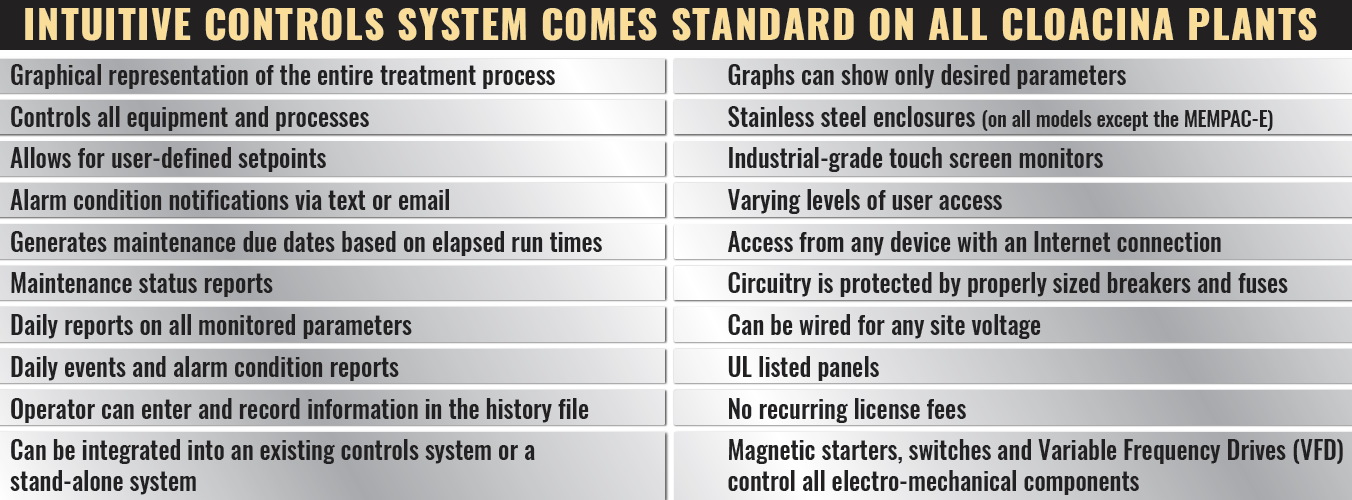
Our Revolutionary Controls System
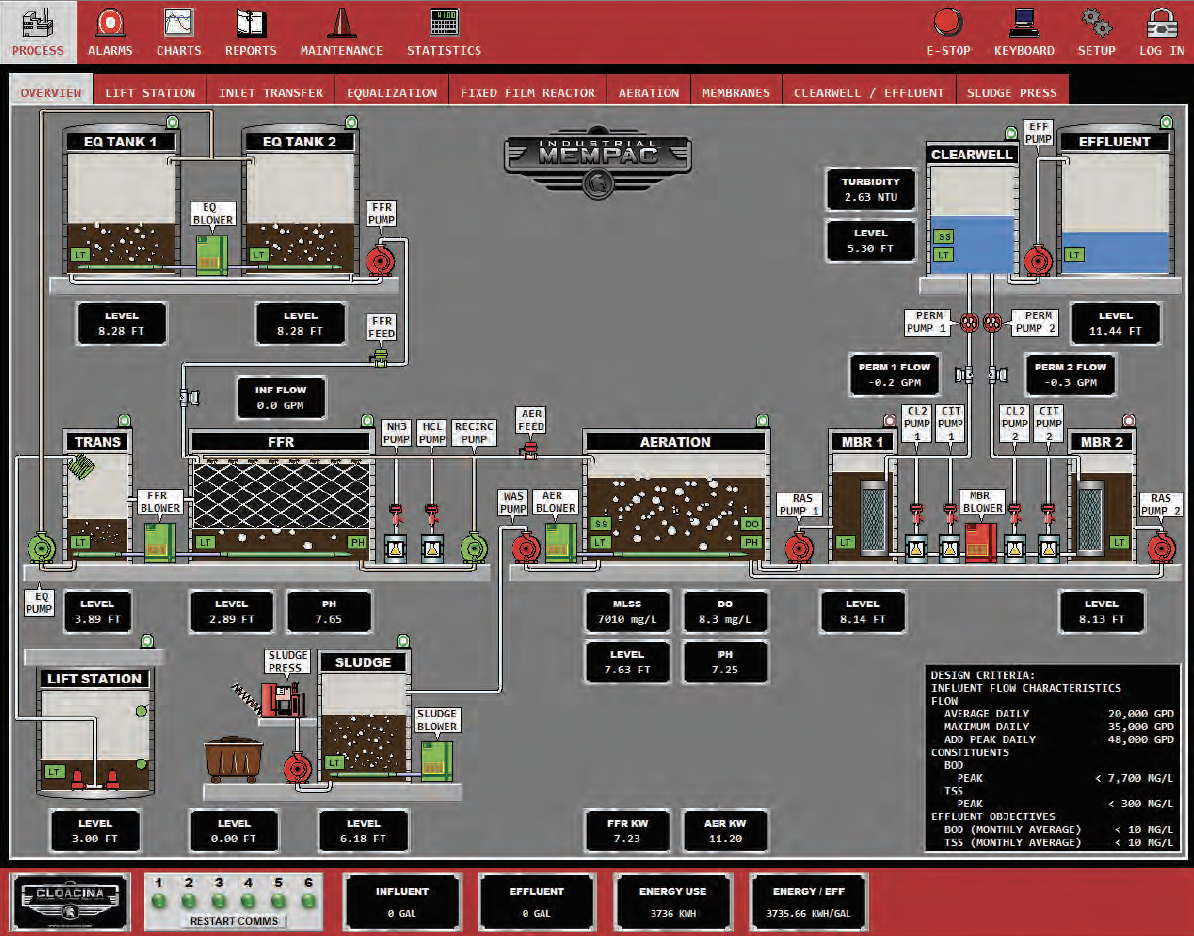
Cloacina's controls system allows clients to log in from any device with an Internet connection, see their wastewater treatment plant represented graphically and make immediate operational changes to the system. This revolutionary controls platform used by hundreds of large corporations and public and private organizations, comes standard on all Cloacina package wastewater treatment plants and major pieces of equipment. Whether a client needs a 1,000 gallon per day Mempac-Mini or a 500,000 gallon per day MEMPAC-M, their system comes standard with the same controls platform used by:
Boeing
National Aeronautics and Space Administration (NASA)
US Department of Agriculture
Siemens
Ford Motor Company
Dow Corning
Dominos Pizza
US Navy
US Army Corps of Engineers
General Electric
HISTORY LESSON

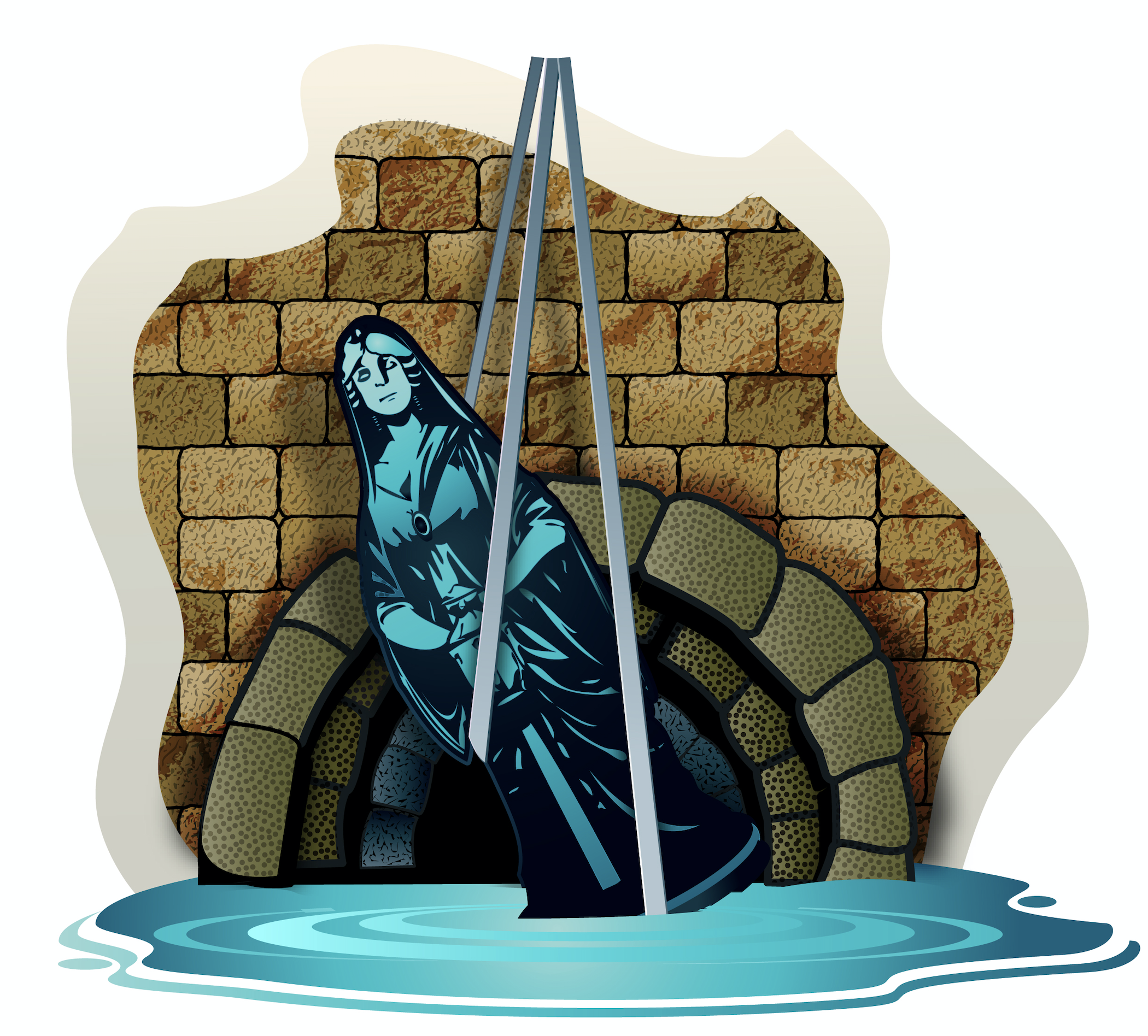
Legend has it that soon after the completion of the Cloaca Maxima, (The main sewer line constructed in the late 500’s BC in Rome), a statue of a woman was found in the sewers. Promptly rescued and cleaned, she became Cloacina, the Roman Goddess of the Sewer. Romans came to believe that Cloacina ruled over and protected their sanitary workers and the extensive sewer system they serviced.
While we may never know why that statue of the woman was thrown into the cloaca, the sewer system revolutionized cleanliness standards and daily life for the citizens of Rome, and made the once discarded statue, a revered goddess. Her importance is evidenced by the fact that a coin, still available today, was minted in her honor in 46 BC. Additionally, Titus Tatius had a Cloacina statue and shrine erected on the Roman Forum in the 8th Century BC. This shrine is believed to be located on the entrance to the sewer system — an ancient manhole. The foundations of this landmark are still visible in Rome.